Working at height: how to get started safely
Working at height with ladders and scaffolding remains one of the most common—and at the same time most hazardous—activities in construction and DIY projects. A correct approach is essential to prevent fall risks, instability, and accidents.
In this blog, you’ll discover how to approach working at height safely, both as a professional and as a private user. Whether you work at height daily or carry out a one-time project, proper preparation makes the difference between risk and safety.
Here’s how to properly assess risks when working at height:
At the start of the work, you determine whether you will use a ladder, step ladder, mobile scaffold, or another work platform.
👉 Discover the full ESCALO range here, offering a solution for every situation. But be careful! Don’t just look at “what is convenient”, but first ask yourself “what is safe and responsible”.
As a professional (especially in construction, maintenance, or industry), you are required to carry out a thorough risk assessment. This is not a formality but a legal obligation under European directives and Belgian welfare legislation. 👉 Read more about this in our blog on legislation, guidelines, and safety regulations.
Such a risk assessment is not an absolute requirement for non-professionals, but it is still strongly recommended for all work at height around the home and garden.
What should you pay attention to in your risk assessment?
- Potential hazards in the workplace
- The magnitude and impact of the risk
- Which measures can make the working environment safer?
In practice, there are a number of key criteria you should take into account during your risk assessment:
1. Working height
The higher you work, the greater the risk. From certain heights, a scaffold is often the better choice
2. Duration of the work
Short task = ladder possible
Long-duration work = always choose a work platform
3. Stability
Always work on a level and load-bearing surface
4. Nature of the work
Fine work vs. heavy-duty work?
Do you need tools?
5. Environment
Take into account indoor/outdoor conditions, wind, traffic, and obstacles
6. Risk of falling
The combination of height, surface, and obstacles determines the level of risk
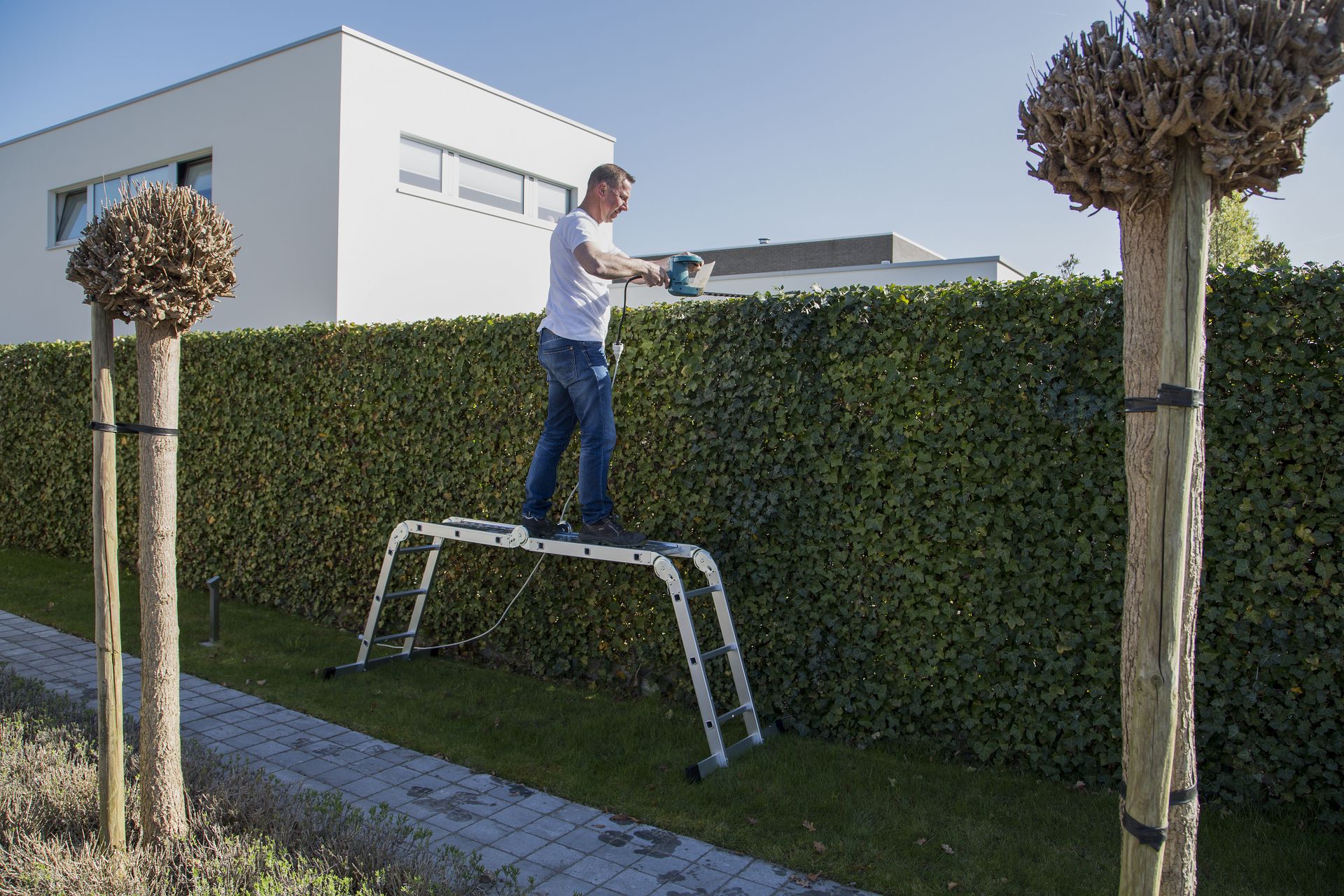
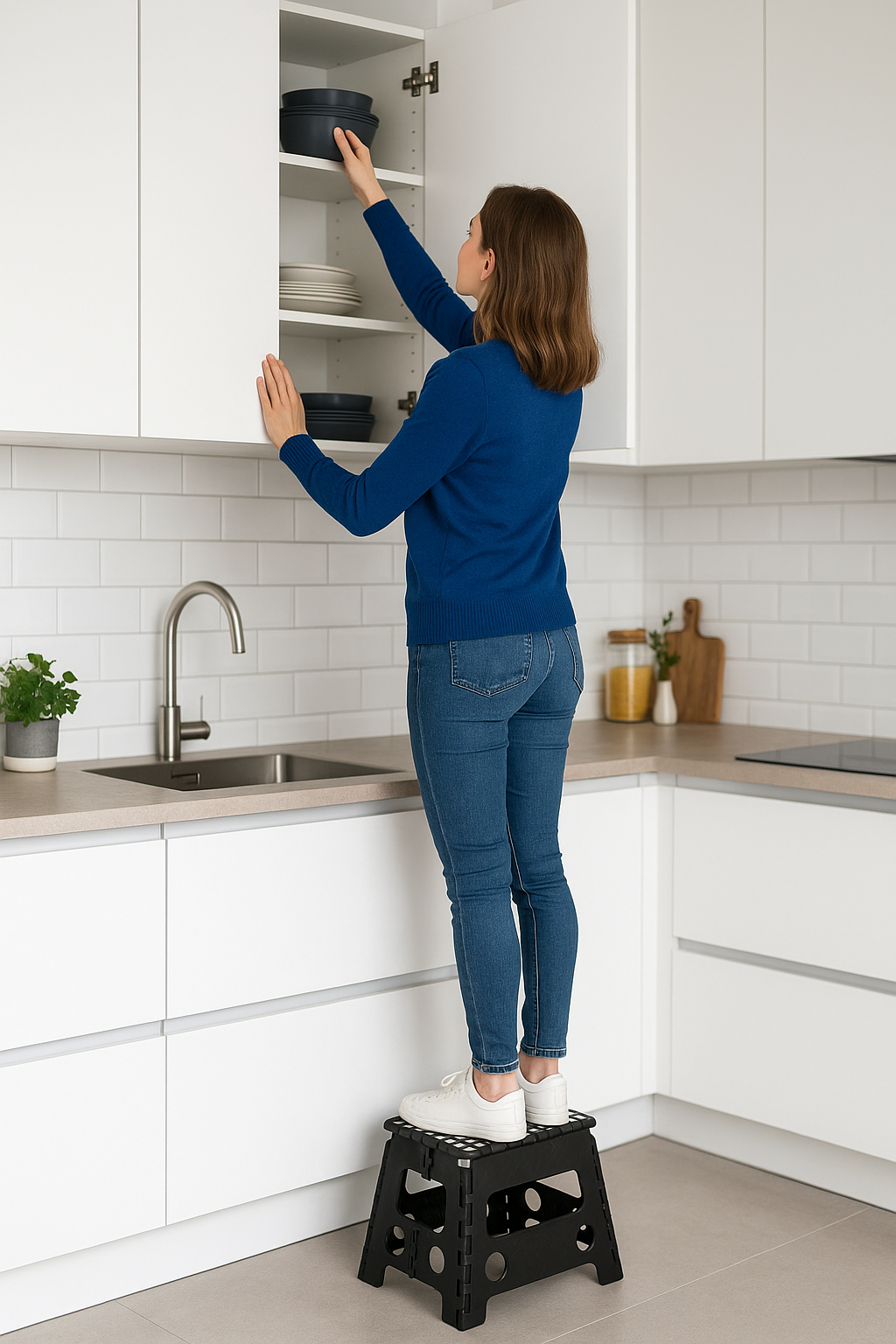
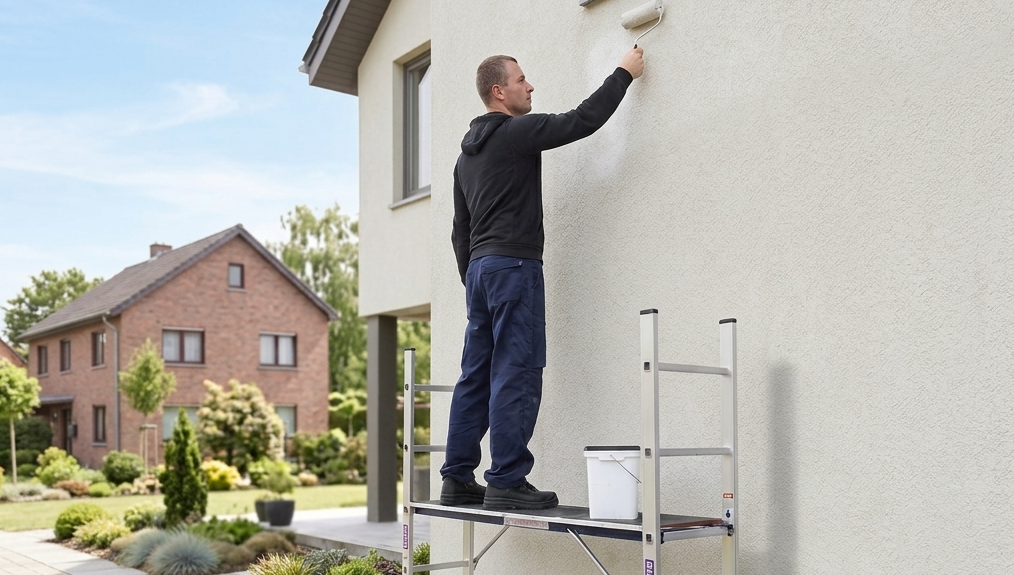
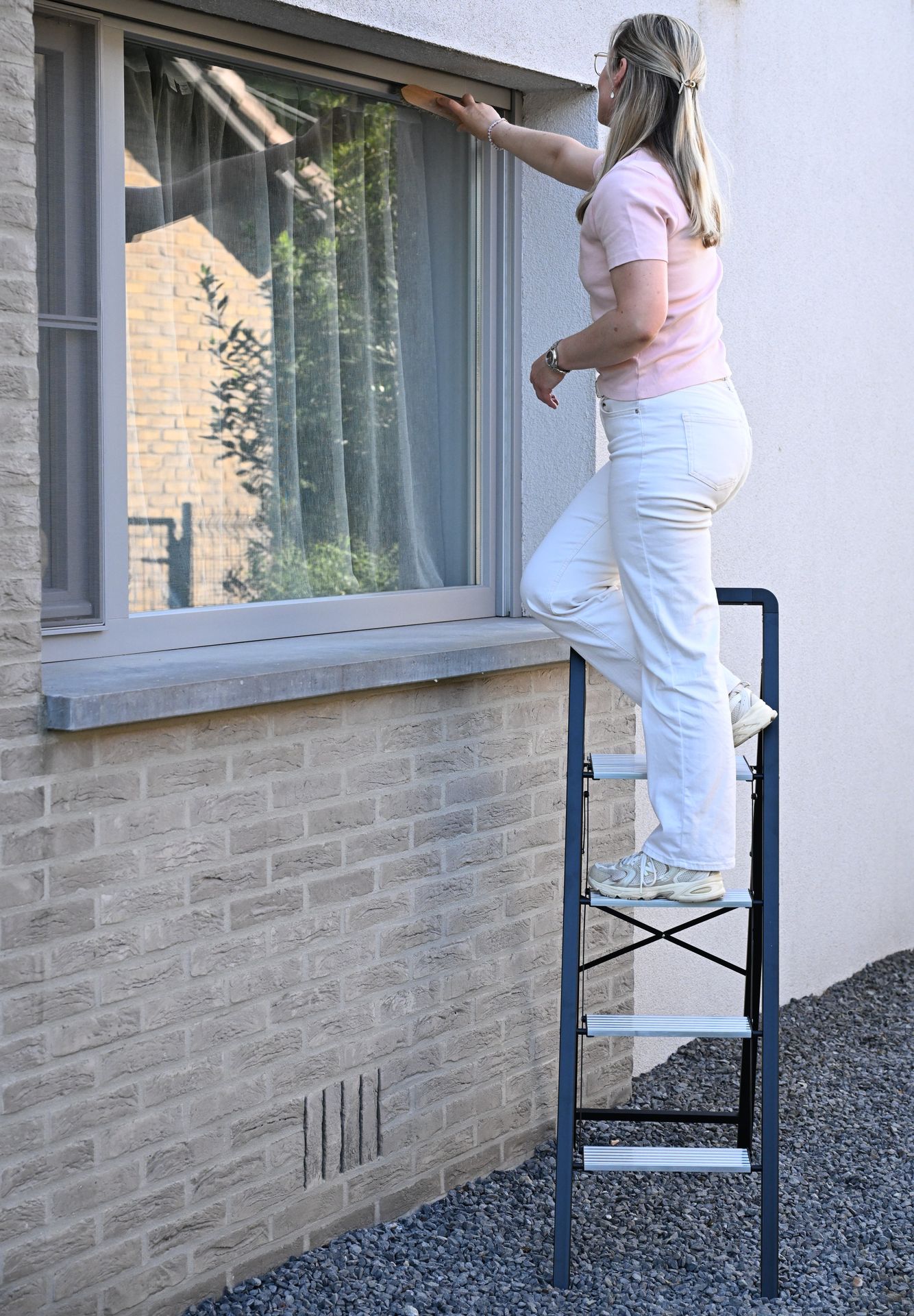
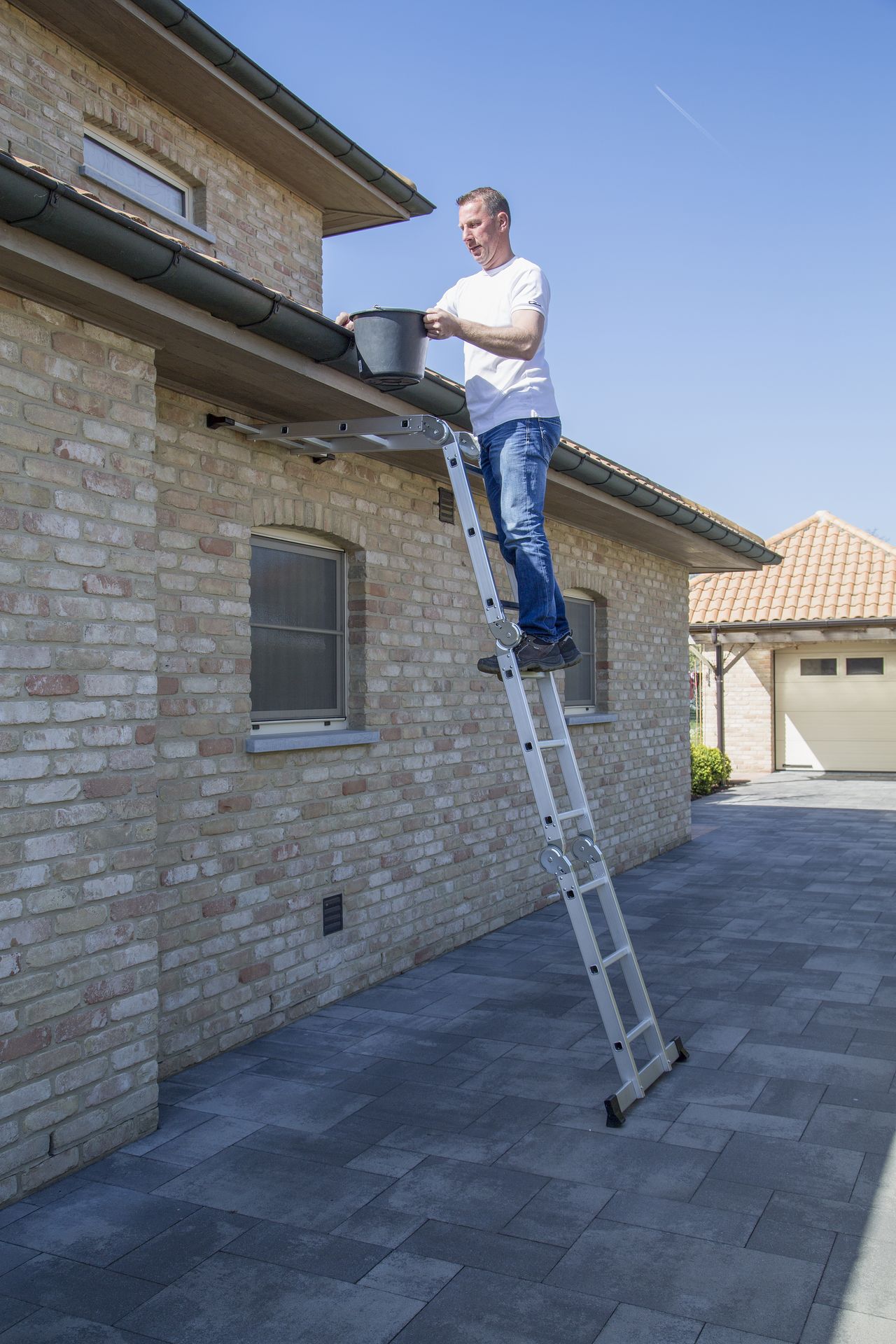
Get started with the right work platform
Your risk assessment forms the basis for making the right choice of climbing equipment for your task. There are many options available, so you can always find a solution that matches your needs. In this blog, discover which option is the best fit for your work at height.
👉 Discover the full range of ESCALO step stools, (step) ladders, and scaffolding here.
When setting up your work platform, it all comes down to stability, correct assembly, and safe use.
What are the key points to consider during installation?
of your ladder or scaffold?
1. Surface and stability
- § Ensure a level, solid surface
- § Use base plates on uneven surfaces
- § Avoid loose or unstable ground
2. Correct assembly
- § Always follow the manual provided by us as the manufacturer, or watch the instruction videos: for example, assembly and use of a telescopic ladder or the Multifold 4-in-1 ladder
- § Use only original parts
- § Avoid improvisations
- § For some work platforms, for example mobile scaffolds such as the ESCALO Workmax, professionals are required to follow training. These guidelines are explained in accordance with the “Code on Well-being at Work”.
3. Anchoring
- § Secure the scaffolding firmly to the structure
- § Particularly important for taller structures and outdoor use (wind loads)
4. Security
- § Mandatory use of handrails
- § Install the required guardrails to prevent tools or materials from falling
5. Access
- § Use a safe access route (via stairs or an internal ladder)
- § Never climb up the outside
6. Load
- § Always observe the maximum weight limit (people + equipment)
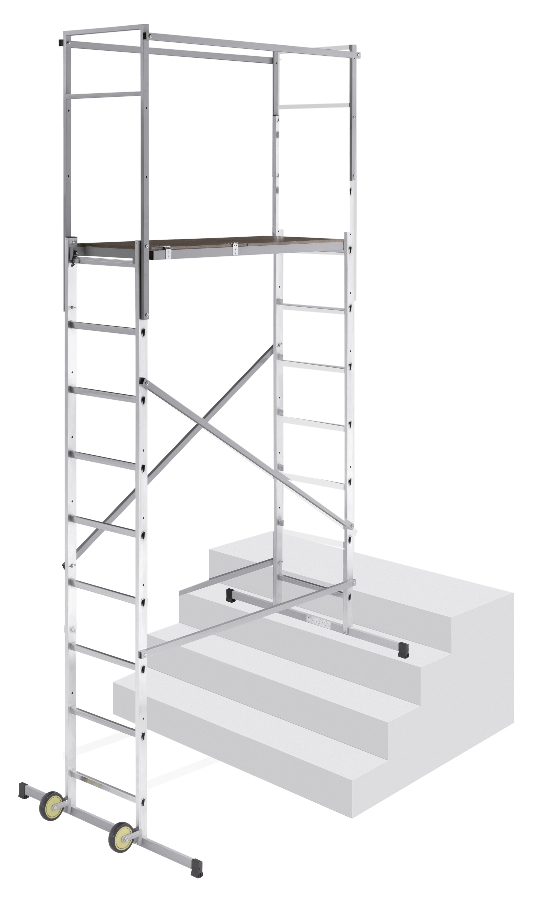
What does the law say about working safely at heights?
Working safely at heights is strictly regulated under both European directives and Belgian law. For professionals, it all starts with a mandatory risk assessment, which forms the basis for every safe work situation.
8 essential tips for working at heights:
It’s now clear that safety is the key to working at heights. We’ll wrap up with a few practical tips to help you get the job done safely:
1. Place your ladder securely against the wall,
make sure both poles touch the wall
2. Keep your work platform free of debris and obstacles.
Do not place any materials or tools under the ladder or scaffolding
3. Don't reach too far to the side; you'll lose your balance.
You might want to move your ladder a little further
4. Do not stand on a ladder with more than one person and make sure
you don't exceed the maximum weight limit on the scaffolding
It causes strain and increases the risk of falling
5. Always work on a dry, stable, level surface.
If this is not the case, use a plank to create the work platform
to be able to stand on solid ground
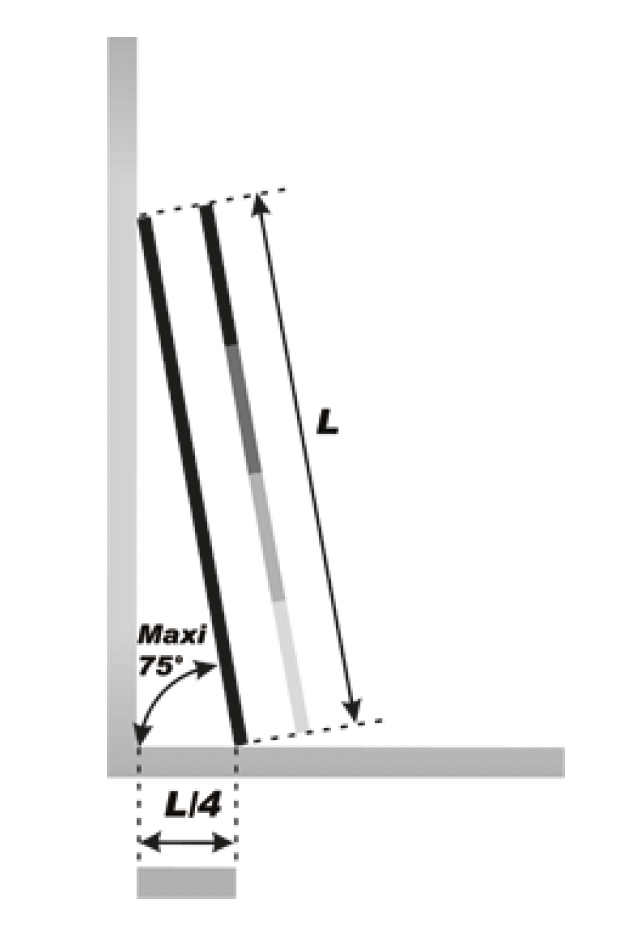
6. Make sure the ladder is at the correct angle:
- The distance between the wall and the base of the ladder should be one-quarter of the ladder's length—or an angle of 75°.
- If the ladder is too close to the wall, it will tip backward
- If he stands too far from the wall, it will slip away
7. Follow these guidelines regarding working height:
- You need to reach a height of 6 meters: use a ladder or scaffolding that is at least 5 meters high (with a minimum height difference of 1 meter)
- You need to be 6 meters high: use a scaffold or ladder that is at least 7 meters high (minimum 1-meter difference)
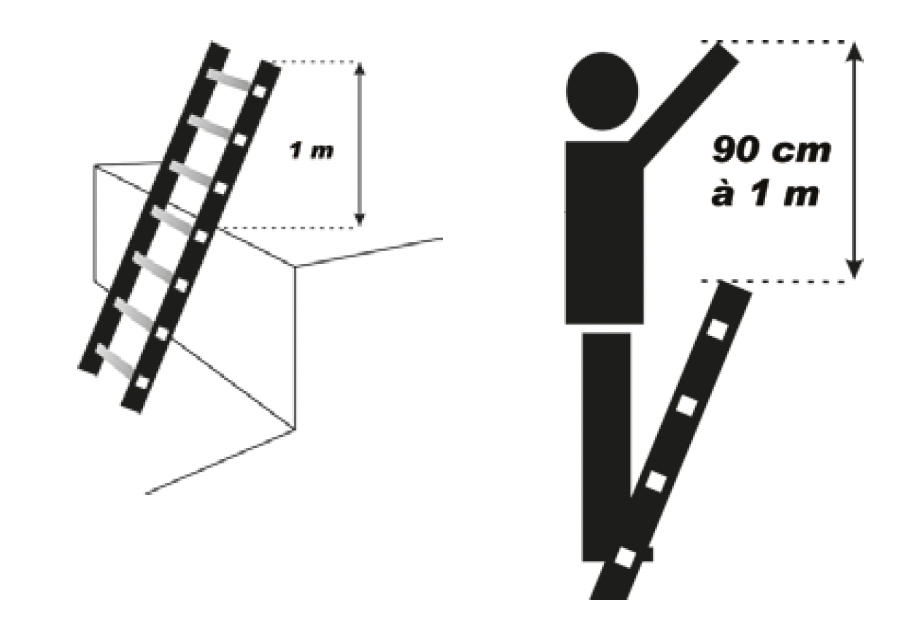
- The distance between the top of the ladder and the rung you are standing on must always be 1 m
8. Always check the step stool, stepladder, ladder, or scaffolding
for defects or damage before each use
Working at heights using ladders and scaffolding requires a well-thought-out approach. By accurately assessing the risks in advance and choosing the right work platform, you can work more efficiently and with greater control.
Whether you're a professional or a DIY enthusiast, the right knowledge and preparation make all the difference.