Working at heights: choose the right work platform
Working at heights occurs more often than you might think. In sectors such as construction, cleaning, and garden maintenance, it’s part of everyday work, but even at home you regularly use a ladder — for example, to replace a light or to retrieve something from a high cabinet.
Choosing the right work platform (such as a ladder, step ladder, or scaffold) is essential for working safely at heights. But which type should you choose for your situation?
Risk assessment when working at heights
Professionals are legally required to carry out a risk assessment before starting the work.
👉 Be sure to read our blog about risk assessment and how to work safely at heights in general. Because even as a DIYer, it’s best to start with a proper safety assessment. The risk assessment forms the basis for making the right choice of equipment for your task.
Ladder vs. scaffold: what should you choose and when?
The choice between a ladder and a scaffold depends on the level of risk and the nature of the work.
When do you choose an ESCALO step ladder or ladder?
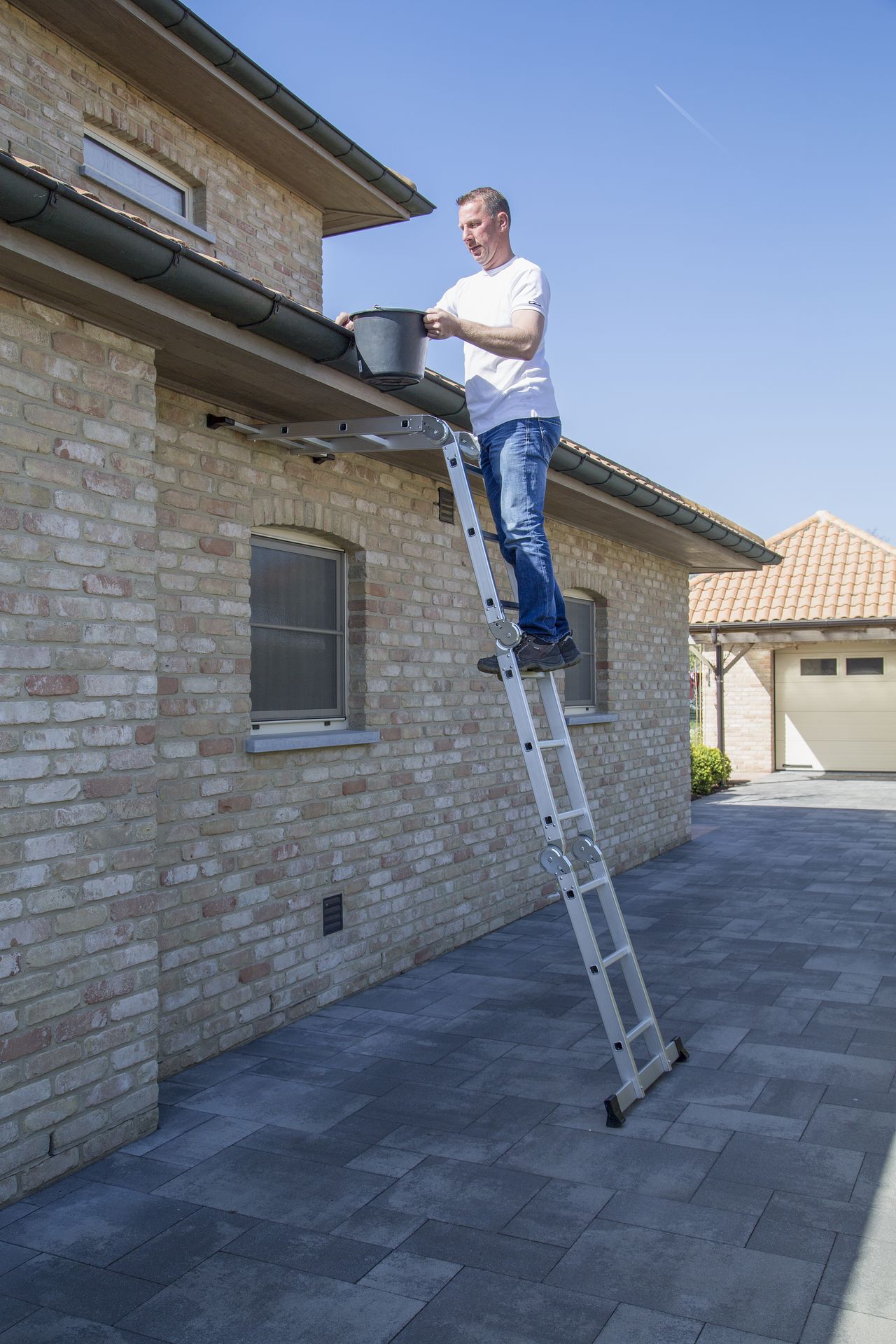
A ladder is suitable for short and simple tasks with a low risk:
- Short working duration (max. 30 min.)
- No significant force required
- Three points of contact:
- You always keep 3 of your 4 limbs in contact with the ladder
- This way, you remain balanced at all times
- Keeping one hand free is recommended to perform a task
- Limited working height
- Stable surface
- Examples:
- Replacing a light bulb
- Minor inspection
- Connecting a cable
- Naar iets reiken in de hoogte
When do you choose an ESCALO scaffold?
A scaffold is necessary for more intensive and higher-risk work:
- Long-duration tasks
- Use of both hands is required
- Working with tools or materials
- Increased risk of falling
- Need for stability and strength
- Examples:
- Painting
- Installing equipment
- Electrical work
- Façade work
Ladder vs. scaffold: safety features
Most work platforms are made of aluminum:
- Ideal for mobile work
- Lightweight and easy to move
- Strong and sustainable
A steel version is common for fixed or industrial scaffolds, such as for example the ESCALO Quickwork scaffold. Steel is not prone to deformation, even under heavy loads.
All work platforms are based on one fundamental principle: working safely at heights.The safety of ladders, step ladders, and scaffolds is legally guaranteed by European Standards (EN).
All ESCALO work platforms comply with the correct European Standard. This way, you are guaranteed to choose a product that meets the highest requirements in terms of safety, reliability, and durability.
Key components of a ladder
An ESCALO ladder is simple, but includes crucial safety components:
- Stiles: 2 vertical side rails – provide strength and load-bearing capacity
- Rungs or steps: equipped with an anti-slip profile
- Ladder feet: usually made of rubber or plastic, prevent slipping
- Stabilizer bar: fitted at the bottom, especially on larger ladders – provides extra stability
- Locks/hinges: fitted on extendable or folding ladders – prevent the ladder from collapsing
- Spreader lock: bar or strap between both sections – keeps the ladder stable and open (in A-frame or spread position)
Key components of a ladder
An ESCALO scaffold offers maximum stability and safety thanks to:
- Platform (work surface): often equipped with anti-slip and a hatch
- Guardrails (top and intermediate rails): prevent falls – mandatory at height
- Toe boards (kickboards): at the bottom of the work platform – prevent materials from falling down
- Standards (vertical tubes): load-bearing structure
- Ledgers (horizontal tubes): connect the standards – provide stability
- Diagonal braces: angled connections – prevent swaying or instability
- Wheels with brakes: fitted on mobile scaffolds – allow easy movement and secure positioning
- Access: via an internal staircase or ladder – a safe way to reach the platform
Overview of work platforms: a solution for every task
There are different types of work platforms, each with their own applications:
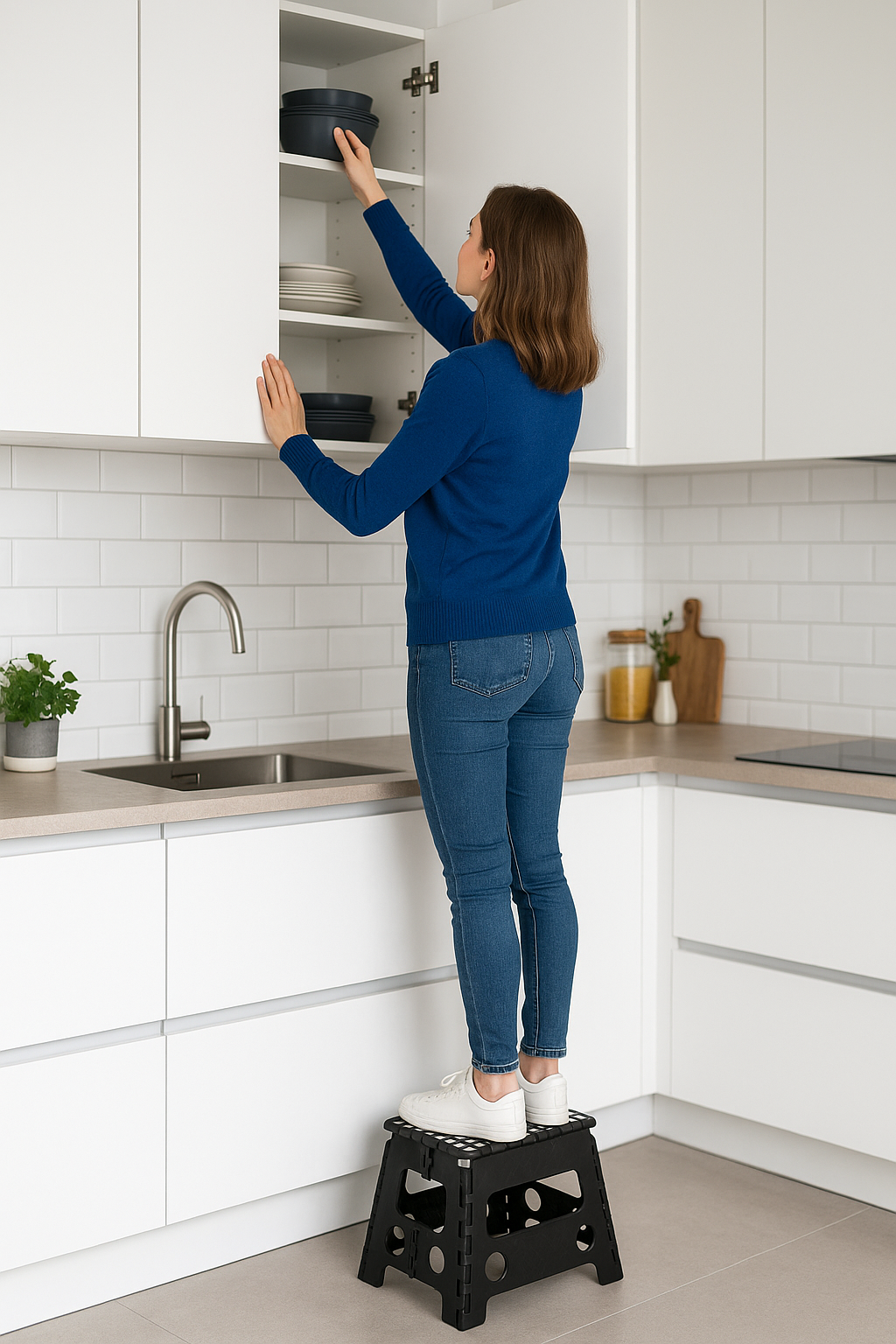
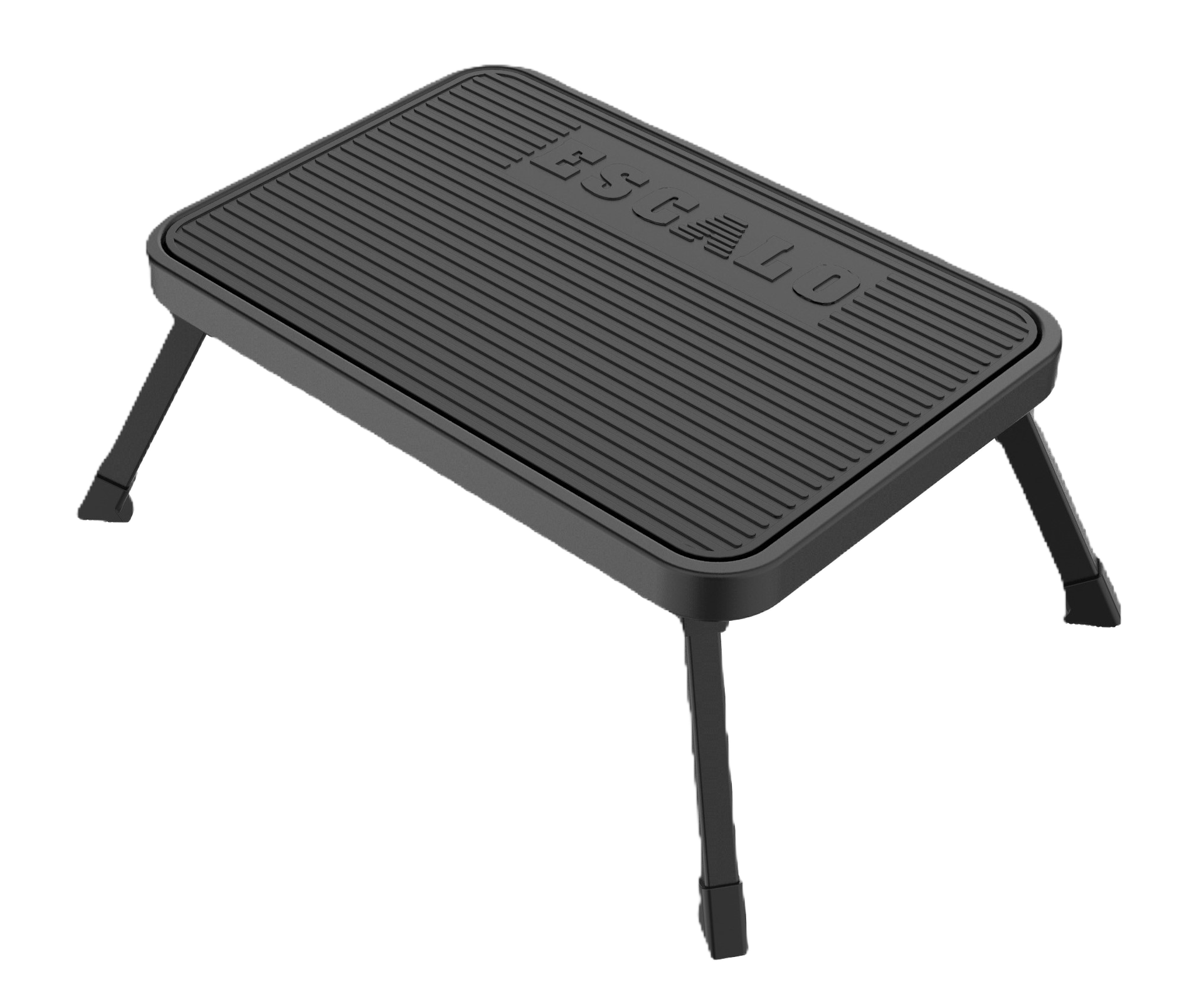
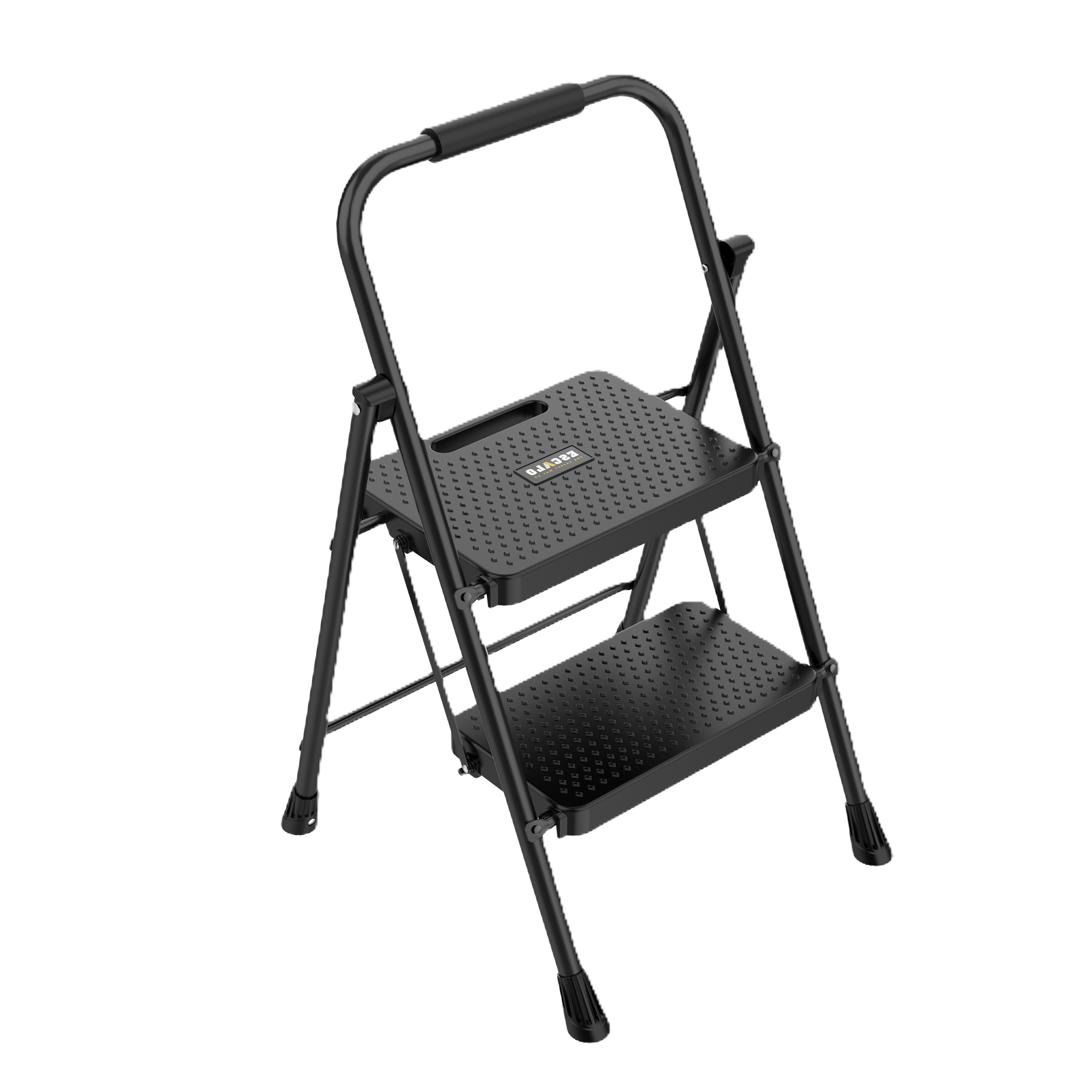
Step stools (work stools)
- Small low aids intended for light and short tasks.
- Compact and lightweight.
- Easy to move.
- Often foldable.
- For limited height (usually up to about 1 m).
- Ideal for household tasks.
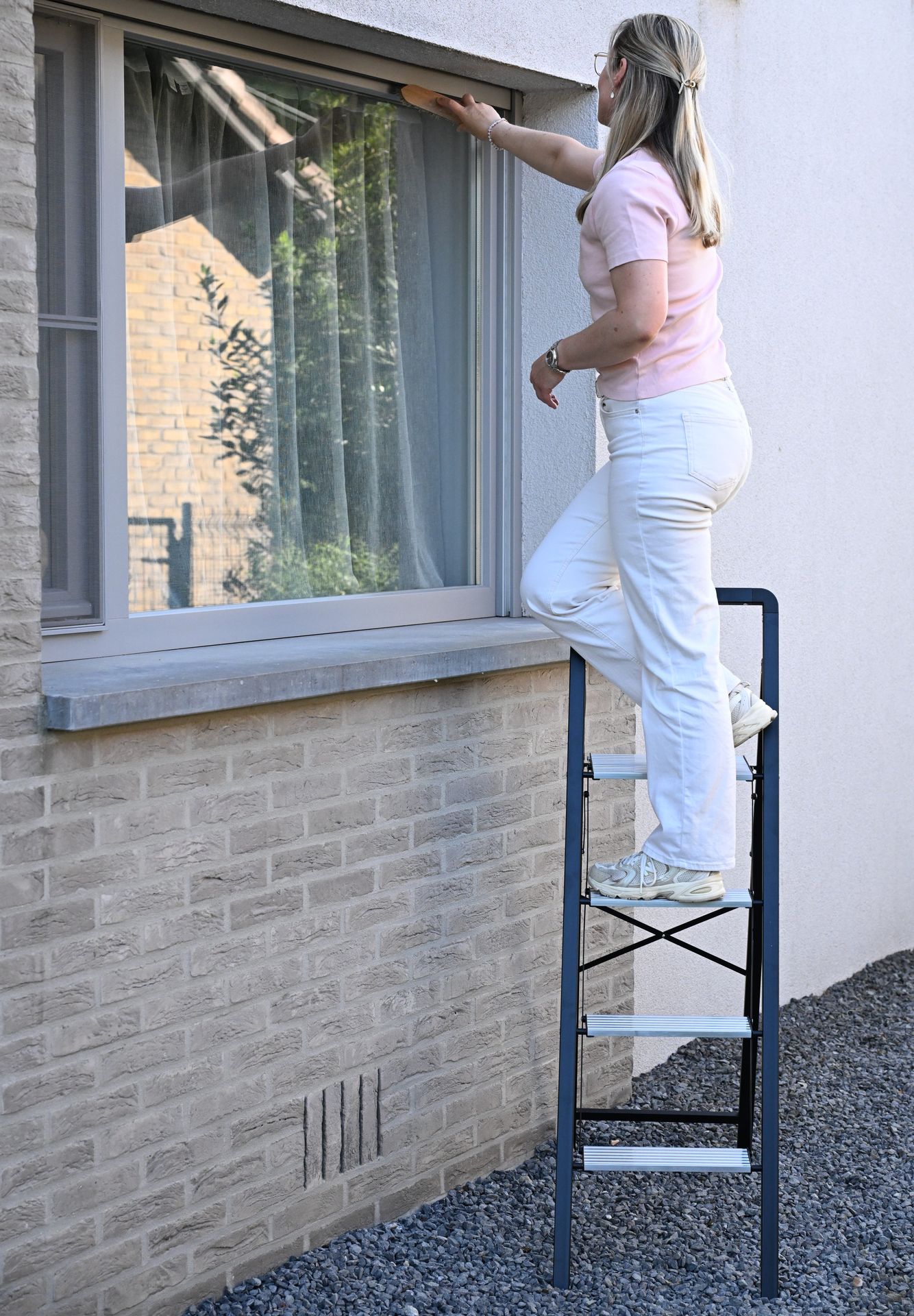
Step ladders
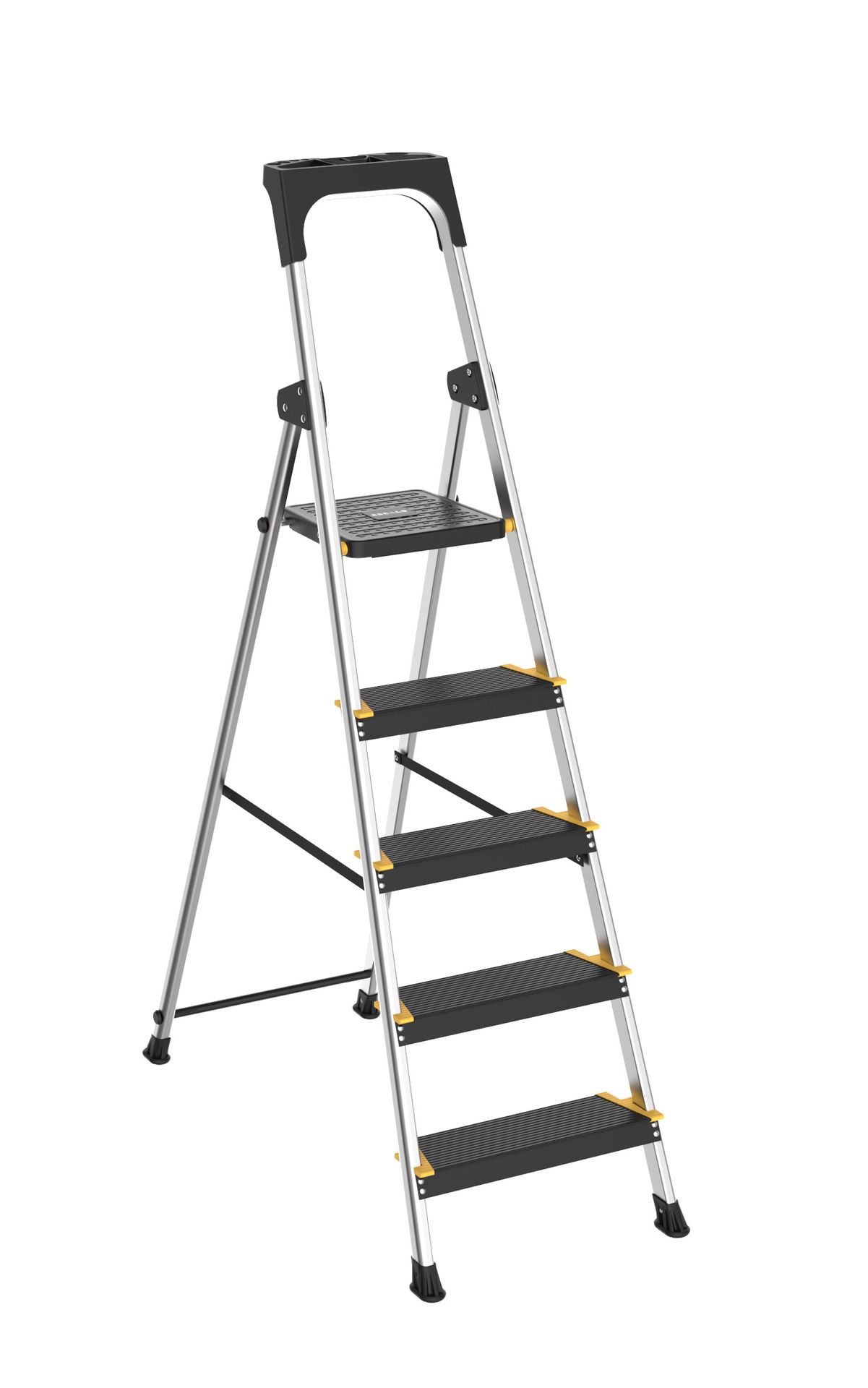
- Self-supporting A-shaped ladders with steps, often with a platform at the top.
- Stable due to the wide stance.
- No additional support point needed.
- Usually equipped with anti-slip steps.
- For low to medium heights.
- Suitable for painting, installations, or indoor DIY tasks.
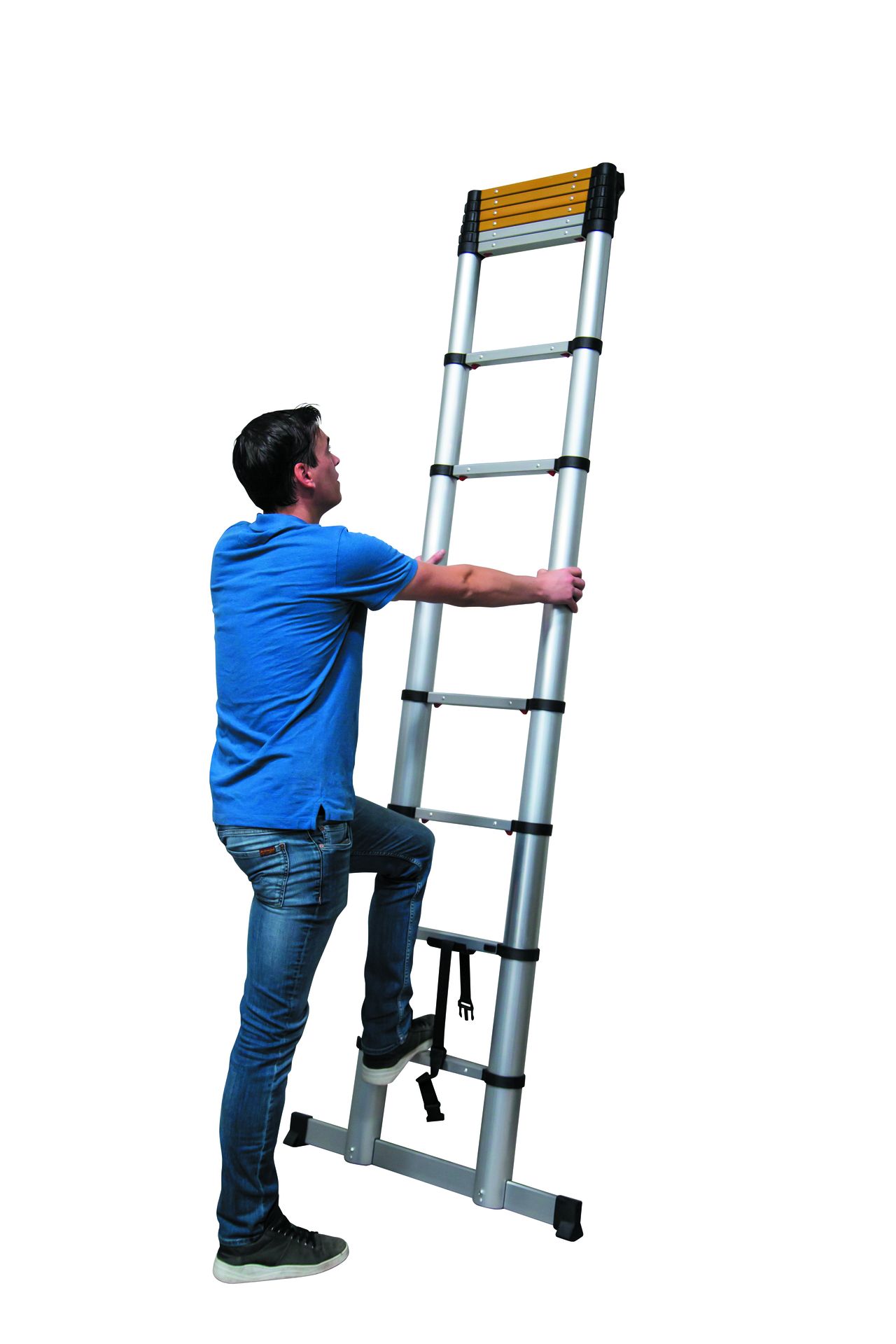
Ladders
- Must be placed against a support point, such as a wall or façade.
- Often extendable or telescopic.
- Less stable without proper positioning.
- Greater working heights possible.
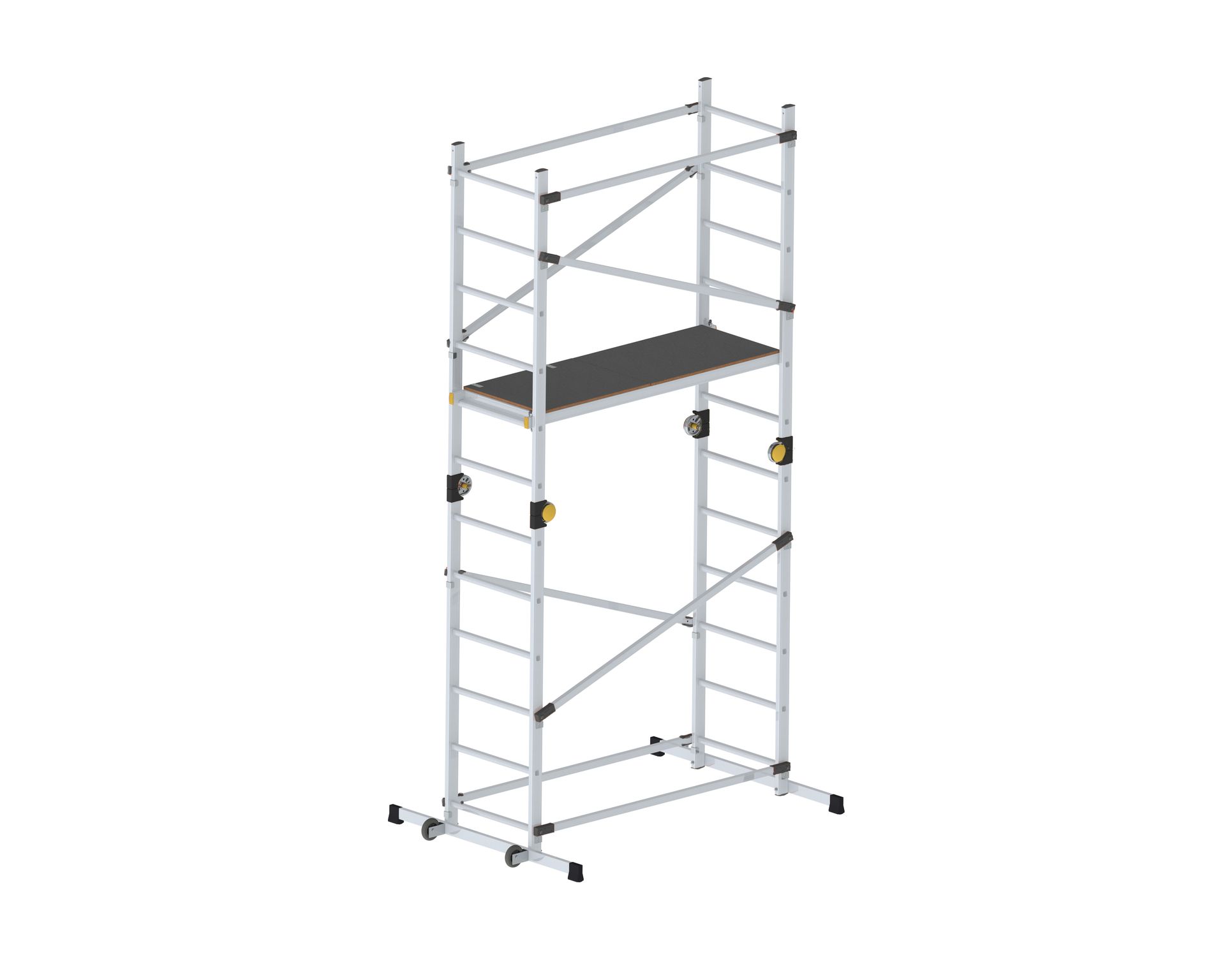
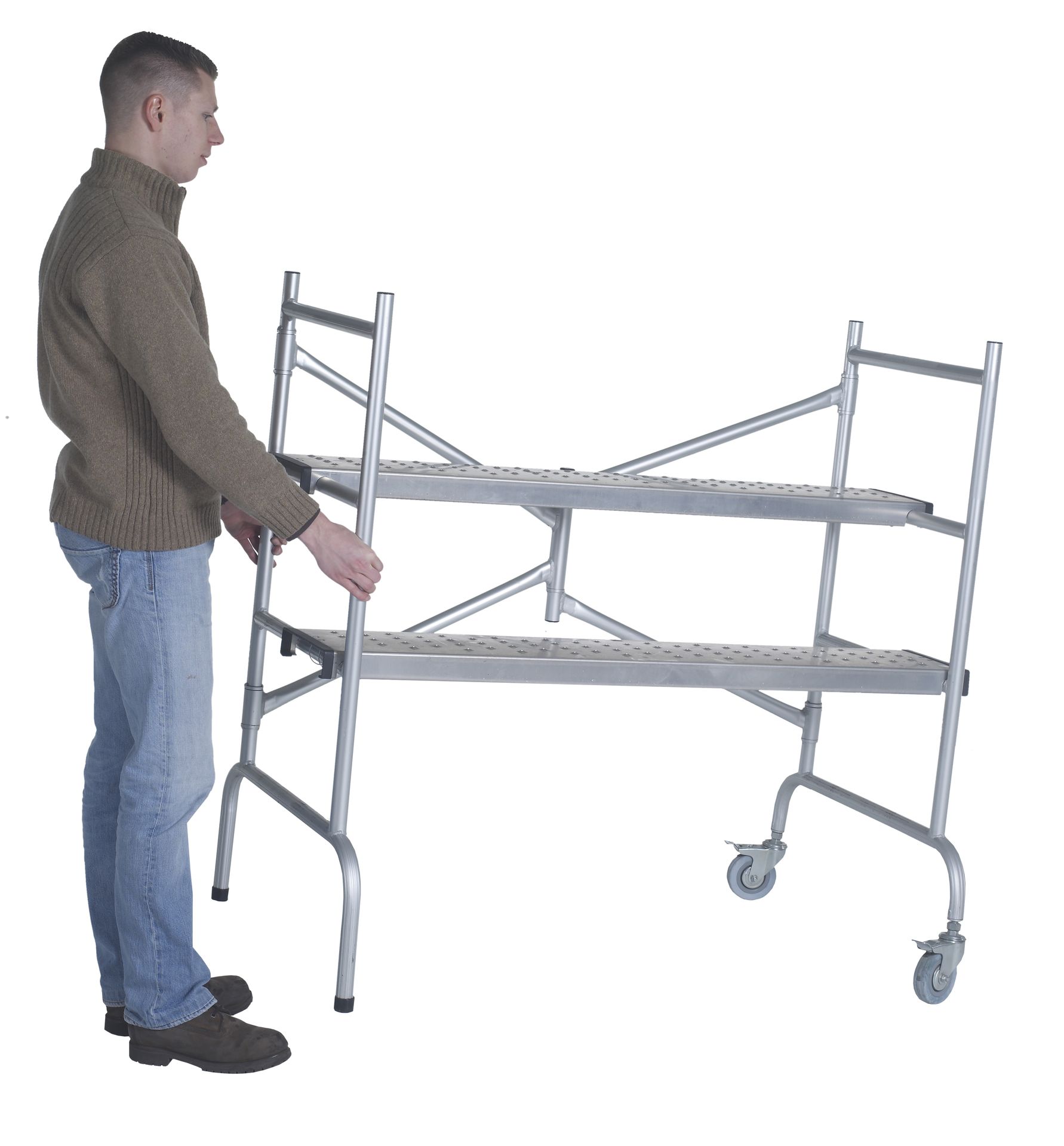
Scaffolding (towers)
- Full-fledged work platforms that provide a stable and spacious workspace at height.
- Large work surface.
- Often equipped with guardrails and wheels.
- Modular to assemble.
- Suitable for prolonged and intensive work at height, such as façade renovation or painting.
Whether you’re a professional or a DIY enthusiast, choosing the right ladder, step ladder, or scaffold makes the difference between working efficiently and safely or taking unnecessary risks.
Explore the full range of ESCALO step stools, (step)ladders, and scaffolding here.
Always tailor your choice to:
- The height
- The duration of the work
- The required stability
- The type of work
This way, you not only work more efficiently, but above all more safely at height.